In the world of high-scale performance marketing, we are witnessing a fundamental shift in the search landscape. With the rise of AI overviews and Large Language Models, user behavior is evolving. We are seeing fewer "fragmented" keyword searches and more complex, detailed, and intent-heavy queries. For global brands with many offerings, such as international hotel chains, this represents a massive opportunity to capture specific user intent that traditional keyword targeting simply cannot match.
However, many advertisers remain skeptical of Google Ads AI Max. They switch it on, observe short-term volatility in their account, and turn it off under the assumption that it "isn't ready" or is a "black box" for budget waste. Having managed over $100M in ad spend for global brands, I can tell you: AI Max is not a magic switch. It is a sophisticated engine that requires a specific architectural foundation to succeed.
If you understand what AI Max was designed to do and why your legacy account structure might be hindering it, you can stop restricting your growth and start aligning your strategy with the future of search.
The Signal Density Problem: Why Legacy Structures Fail
For over a decade, the "gold standard" for PPC was hyper-segmentation. We built Single Keyword Ad Groups (SKAGs), split campaigns by device, and micro-managed bids. While this provided an illusion of control, it is the antithesis of how modern machine learning works.
AI Max requires signal density to drive conversions. Many accounts are still lacking the consolidation required to feed the algorithm effectively. When you turn on AI Max in an oversegmented account, you exacerbate inefficiencies. Similar campaigns begin to compete with each other without the mutually exclusive settings (like negative keywords and strict targeting) that once kept them separate.
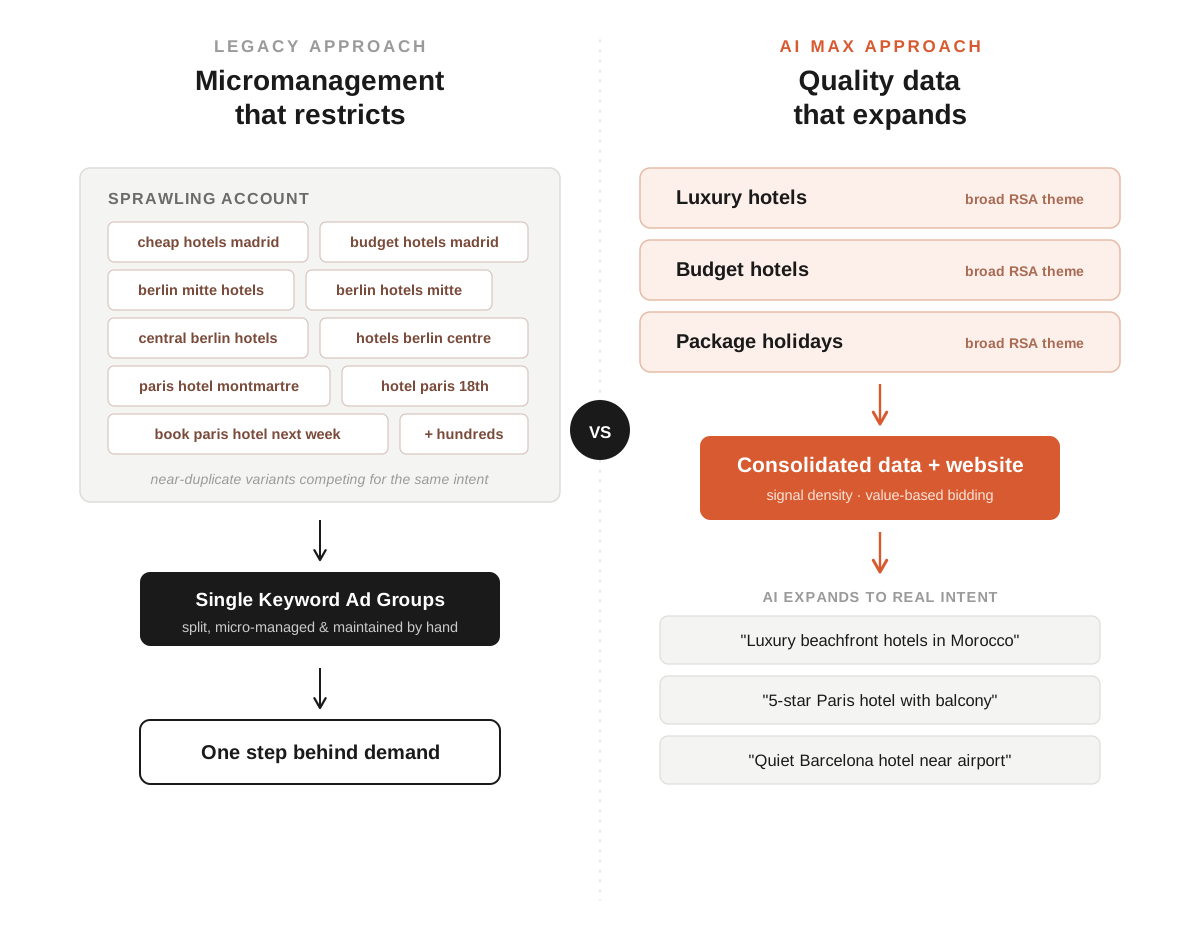
If your conversion data isn't robust, AI Max will continue to go broader until it finds conversions. Advertisers often call this a "lack of guardrails," but the reality is simpler: Your data are your guardrails. To make AI Max work, you must move from a strategy of micromanagement that restricts to one of quality data that expands.
Practical Example: A Global Hotel Brand
Imagine a global hotel brand advertising properties all over the world. The goal is to serve the most relevant ad to every traveler to generate the highest ROAS.
The Traditional PPC Strategy
A traditional strategy often looks like a sprawling web of country-level accounts with hundreds of segmented campaigns and ad groups. The team tirelessly reviews different target countries, cities, hotel names, and combinations of "bank holiday + destination" or "best", "cheap", "high-rated", "quiet" + destination keywords. The account is constantly expanding to search for pockets of niche intent. Some work, some don't. It's never consistent.
The team constantly feels one step behind demand. What worked one week fails the next. Then, the brand emails to say they've done a survey and hotels in Berlin near nightlife could be an opportunity. Time to build more keyword combinations and launch a new campaign. The team build endless reports to track combinations, scripts to manage bids, and perform regular n-gram analysis to stay afloat.
The account becomes so large and unruly, so exact match becomes a source of control in a sea of complexity. When the brand decides to focus on a new priority market and destination for Q1, the PPC team scrambles to build a new set of segmented combinations to meet the deadline. The relationship between the PPC team and stakeholders has shifted. The marketing experts aren't leading the strategy and providing insight. They're spending all their time trying to maintain and expand an increasingly complex manual system – Like throwing darts at a dartboard and trying to hit a bullseye.
The AI Max Strategy (The Solution)
The idea behind AI Max solves for this structural inefficiency by aligning your advertising with individualized search intent and your website. Imagine instead that you create a campaign structure focused on broad subcategories for the hotel brand:
- Luxury Hotels
- Budget Hotels
- Package Holidays
You align these with Responsive Search Ads (RSAs) that speak broadly to these themes – no super-niche keyword+ ad copy combinations. You enable AI Max's Text Customization and URL Expansion, and suddenly you start to see your campaign is serving headlines that match the specific, conversational intent of the user:
- "Luxury Beachfront Hotels in Morocco"
- "5 Star Paris Hotel with Balcony"
- "Quiet Hotel in Barcelona – only 5km from the Airport"
Your ads become personalized at scale, sending users to the exact page on your site that fits their needs. The oversegmentation is gone, data is consolidated, and the account becomes an insight engine: "We're seeing high demand for Madrid hotels mentioning 'air conditioning.' Should we consider building paid social creative around this USP?"
Preparing Your Account for Intent-Led Search
To stop reacting to search trends and start predicting them, you must prepare your infrastructure.
1. Optimize Your Website Architecture
If your website has a clear, logical structure, AI Max can use it to deliver tailored results. Your subpages must be aligned with the specific target audiences you want to address. Think of your website as the "source of truth" the AI uses to understand your offering.
2. Consolidate for Data Liquidity
Design your account based on traffic expansion, not restriction. Group your offerings into broader thematic campaigns. This allows the algorithm to gather enough data signals to exit the learning phase faster and make more accurate bidding decisions.
3. Master Value-Based Bidding (VBB)
Data is the engine. Use enhanced conversions, server-side tracking, and value-based bidding to measure the full lifecycle of a customer. In our hotel example, a search for a luxury suite is objectively more valuable than a search for a budget room. Make sure the value data you share with Google reflects this, allowing the AI to prioritize high-value users. Google Ads is smart, but it doesn't make its own judgements about your business – it needs data.
Guiding the Machine: The Expert's Controls
AI Max is not "set it and forget it." Experts maintain control through high-level strategic guidance rather than manual keyword bids:
- Asset Management: Your headlines and descriptions are the jumping-off points for AI expansion. Regularly audit the Asset Report and remove low-performing headlines to guide the AI’s creative direction.
- URL Exclusions: This is critical for global brands. If you are running a regional campaign but have a global site, exclude URLs that aren't relevant to that market. Always exclude non-revenue pages like customer support, login pages, or careers.
- Negative Keyword Lists: While you aren't bidding on keywords, you should still monitor search terms and apply account-level negatives to prevent the AI from pursuing low-intent or irrelevant queries that crop up regularly and waste budget.
Conclusion: The New Era of Intent
The opportunity with AI Max is significant: it allows you to capture user intent that is too complex for a standard keyword list. As search becomes more detailed and conversational, the brands that succeed will be the ones that have built a consolidated, data-rich infrastructure.
That foundation starts with robust first-party data paired with a well-structured, logically organized website. When your account architecture, measurement framework, and site experience are aligned, AI Max can do what it was designed to do: identify high-value demand and match it to the most relevant user experience at scale.
Stop fighting for control over every individual keyword and start building the system that allows AI to find your best customers across the entire global landscape.
I help global brands build the foundation that makes AI Max success a reality. From establishing robust first-party data infrastructure and restructuring legacy Google Ads accounts, to implementing value-based bidding strategies that give the algorithm the right signals to act on. The goal is always the same: a system that anticipates demand rather than chasing it, and grows rather than gets restricted. If you're ready to move beyond fragmented keyword lists and build a scalable, intent-led search strategy, let's talk.