Meta's Andromeda algorithm update represents the most significant structural change to paid social advertising in years. But despite its massive implications, many advertisers are still using strategies from the pre-Andromeda era—over-segmenting audiences, manually testing interest groups, and treating creative as an afterthought.
This article breaks down what Andromeda really changes, why the old approach no longer works, and what advertisers must do differently to maximize results in the current environment.
Why Audience-Based Testing No Longer Works
Historically, advertisers relied on manually segmented audiences to guide the algorithm: interest buckets, demographic targeting, lookalikes, and funnel-based structures. But Meta's ecosystem has evolved in two major ways:
1. Data-driven audiences are now more powerful
Meta's Advantage+ suite uses vast real-time user behavior signals to determine who is most likely to convert. These signals are far richer and more predictive than any interest-based audience setup.
2. Andromeda is built to prioritize creative, not audience inputs
With the ability to evaluate tens millions of creative permutations in milliseconds, the algorithm no longer needs narrow audience instructions. Instead, it needs variety: different ad formats, styles, hooks, and lengths so it can match the best creative to each individual user in real time.
In this environment, audience micromanagement is not only unnecessary, it's counterproductive. The more advertisers restrict delivery through excessive segmentation, the less Andromeda can optimize.
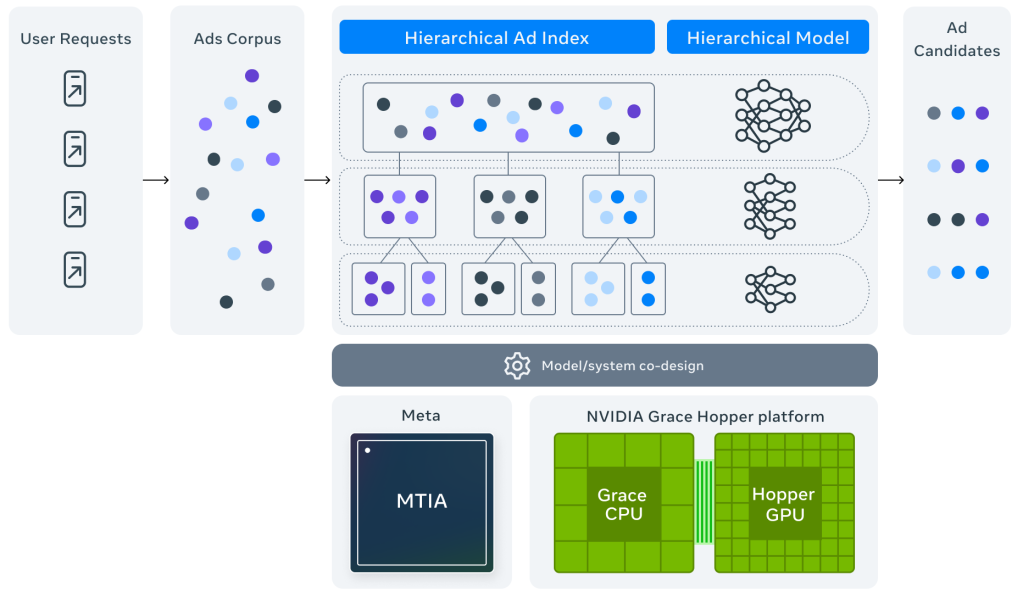
The Rise of Creative-First Optimization
The shift toward creative-first optimization represents the biggest structural change in Meta advertising in years. The algorithm is now extremely good at understanding where a user is in the funnel, without you forcing separations through multiple campaigns or ad sets.
Rather than pushing people through a predefined funnel, Advantage+ uses platform-wide data to:
- Detect user intent signals in real time
- Predict conversion likelihood based on behavior patterns
- Adapt which ad is served as the user's mindset evolves
This means your creative must be just as flexible.
Creative diversity beats "finding the winner"
Gone are the days of identifying one "winning ad" and pouring all budget into it. User preferences are now:
- Fluid
- Context-dependent
- Highly personalized
For example:
- A static image may resonate when someone is quickly scrolling on the train.
- The same user may respond better to a UGC-style video later in the evening when they're relaxed at home.
If you only provide one format or angle, you limit the algorithm's ability to adapt. Creative diversity is now an essential element of success.
Tactics for Success with Meta Andromeda
1. Shift from audience testing to creative testing
Stop splitting budget across dozens of audiences. Consolidate campaigns and use Meta's data-driven systems. Instead, invest your energy in generating:
- Multiple creative formats (static, video, UGC, carousels, GIFs)
- Multiple messaging angles
- Multiple hooks and visual styles
2. Embrace Advantage+ and let the algorithm work
Advantage+ Shopping and Advantage+ Audience tools exist because they use more data than advertisers ever could. Forcing manual segmentation reduces scale and breaks optimization.
3. Maintain a high creative velocity
Because Andromeda evaluates millions of options so quickly, campaigns benefit from a constant flow of new creative. Stagnant ads decline faster than ever.
4. Build creative for all stages of intent
Your library should include:
- High-attention, thumb-stopping awareness ads
- Social-proof or benefit-led direct response videos
- Retention and reassurance creatives (UGC testimonials, reviews)
Machine learning decides who needs what. Advertisers supply the assets and build strong data connections.
5. Use AI tools to scale creative production
Andromeda was specifically engineered to handle a large increase in AI-generated ads. Advertisers should take advantage of that. Today's strongest creative pipelines incorporate:
- Meta's own AI creative tools (AI background generation, text variations, resizing)
- Third-party UGC-generation tools (e.g., UGC marketplaces powered by AI matching)
- Scriptwriting and concept-generation models
- AI video editing and image generation tools
The brands that succeed will be the ones using AI to produce high volumes of quality creative efficiently.
The Cost of Not Adapting
Advertisers who cling to outdated structures with lots of audience segmentation, limited creative testing, and infrequent updates will see declining performance. Costs will rise, conversion rates will fall, and they'll be outperformed by brands who feed the algorithm what it needs.
The competitive advantage now belongs to brands who:
- Produce more creative, faster
- Embrace automation
- Trust the algorithm
- Focus on messaging and storytelling instead of micromanaging delivery
Brands must consider how they adapt their planning, analysis, internal communication, and paid social strategy when the most effective audience targeting is led by AI.
The Role of First-Party Data and Tracking
The advantages of machine learning and AI cannot be realized without a strong flow of valuable data. As privacy changes continue to reshape digital advertising, first-party data and advanced tracking setups have become essential components of Meta campaign success.
Implementing server-side tracking and the Meta Conversions API (CAPI) ensures that critical conversion signals are sent reliably, even when browser-based tracking fails. This enhanced signal quality directly improves the Andromeda algorithm's ability to learn, attribute value accurately, and optimize campaigns in real time.
Brands that invest in robust data infrastructure with clean event setups, consistent deduplication, and strong server-side integrations will equip Meta's systems with the feedback loops needed to deliver smarter targeting, more efficient spend, and stronger long-term performance.
Ready to Adapt? I Can Help.
As a digital marketing expert, I help brands modernize their Meta Ads strategies to thrive under a changing landscape. From creative testing frameworks, to campaign architecture, to advanced tracking setup, I can guide you through the transition and ensure your brand stays competitive.
If you want to unlock the full power of Meta's creative-first model and drive better results from your paid social campaigns, I'd be happy to help. Reach out and let's elevate your marketing strategy for the new era of Meta advertising.